

Rooflights
Profiled rooflights introduce natural daylight into industrial, commercial and agricultural buildings. GRP and polycarbonate sheets, together with insulated rooflight assemblies, provide options for compatible single skin, built up and composite panel roofs.
GRP Rooflights
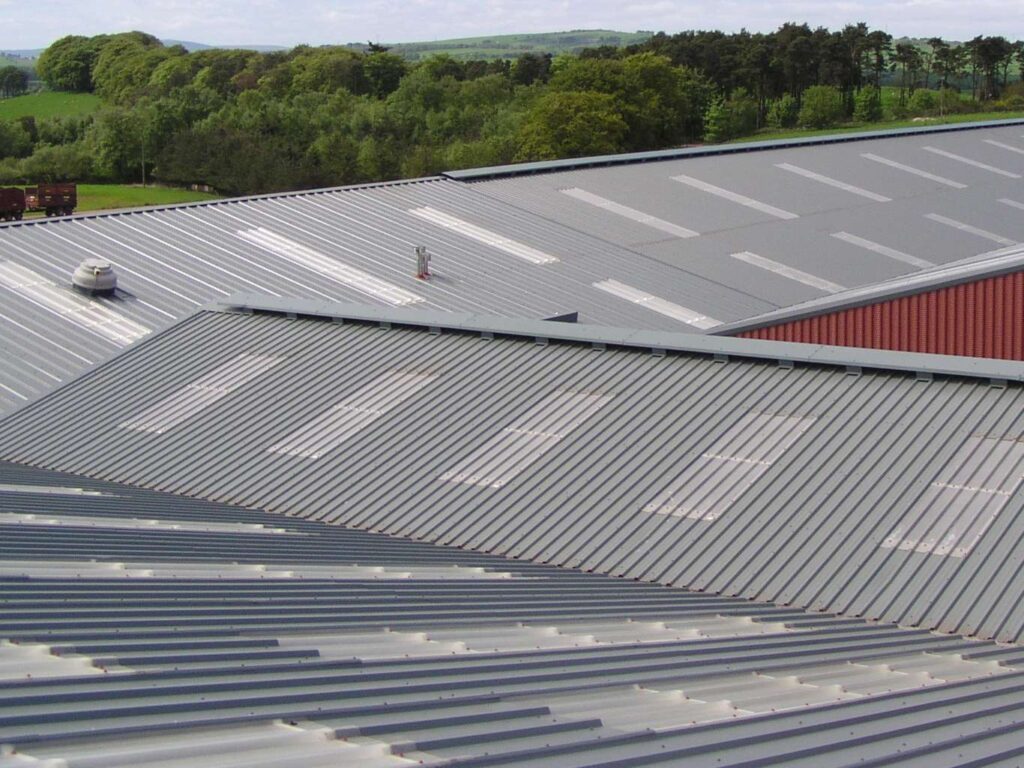
GRP rooflights are made from glass reinforced polyester. Their translucent surface diffuses daylight, spreading it through the building and helping reduce glare and sharp shadows.
Corrugated and box profile sheets are selected to match the surrounding roof covering. GRP can be used in single skin roofs and as the outer and liner sheets within insulated rooflight assemblies. Sheet grades and surface protection vary with the required application and durability.
Polycarbonate Rooflights
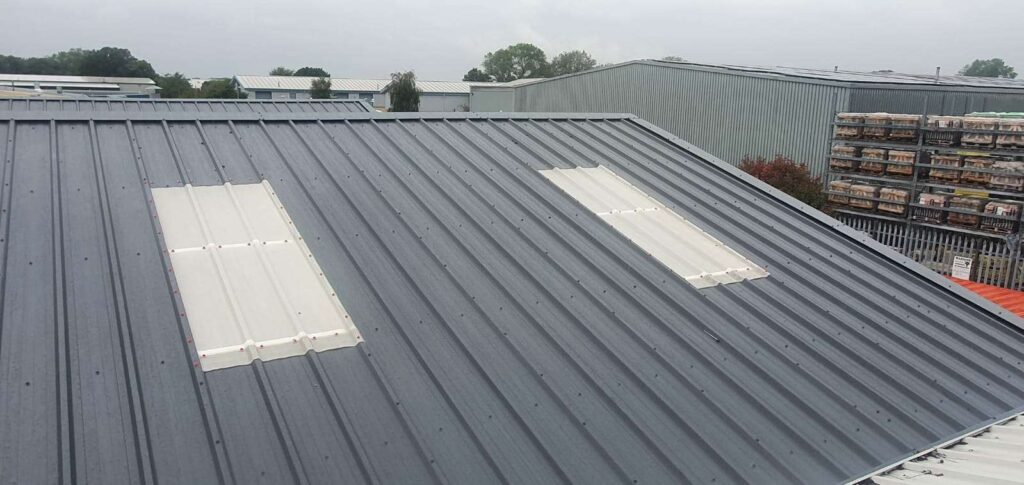
Polycarbonate rooflights combine low weight with high impact resistance. Profiled sheets are available in clear, opal and diffusing options, depending on the selected product, providing different levels and distributions of daylight.
Select the sheet profile, grade and UV protection for the roof application. Polycarbonate expands and contracts with temperature, so the installation must allow the specified movement. Fixings, washers, sealants and materials in contact with the sheet must also be compatible.
Insulated Rooflights
Insulated rooflights combine outer and inner skins with enclosed air spaces and, where specified, additional insulating layers. The assembly may incorporate GRP or polycarbonate components, reducing heat loss compared with a single skin rooflight.
Site assembled rooflights are used within compatible built up roof systems. Factory assembled insulating rooflights, commonly known as FAIRs, are supplied as complete units for compatible composite panel roofs. Their profile, depth, supports and connections must suit the surrounding roof construction.
Rooflight Options
Profiles & Sizes
Match the complete profile of the surrounding roof sheet, including its rib spacing, depth, cover width and side lap. For composite panel roofs, the panel reference, depth and rooflight connections must also correspond.
Rooflight lengths and end laps are planned around the roof layout and purlin positions. Permitted spans and support details depend on the selected rooflight specification.
Light Transmission
Light transmission describes how much visible daylight passes through a rooflight, while diffusion describes how that light spreads. Clear and diffusing finishes create different lighting conditions within the building.
Compare the declared performance of the complete rooflight, including any liner and insulating layers. Rooflight area, position and finish should balance useful daylight with glare and overheating risk. Solar heat gain must be considered separately from light transmission.
Thermal Performance
Insulated rooflights reduce heat transfer through the roof opening. Compare the declared U-value for the complete assembly; a lower value means less heat transfer. Rooflights of the same overall depth can have different thermal performance.
The specified internal seals and junction details must maintain air and vapour control around the rooflight. Condensation risk also depends on the building’s internal temperature, moisture levels and ventilation.
Fire & Non-Fragility
Confirm the declared reaction to fire and external roof fire performance for the specified rooflight construction. A classification for one component should not be assumed to cover every combination of outer sheet, liner and insulating layers.
Non-fragility relates to the installed assembly, including the rooflight grade, support centres, fixings and laps. Check the required classification and declared expected period of non-fragility against the project specification and installation conditions.
Follow the installation guidance for the selected rooflight, including its supports, fixings and compatible seals.
A non-fragile classification does not make a rooflight walkable. Profiled rooflights must not be stepped on. Inspection, cleaning and maintenance require planned safe access.
Matching Existing Rooflights
For replacement rooflights, provide the existing roof sheet or panel reference if known. Similar looking profiles are not necessarily interchangeable, and an insulated rooflight must match the surrounding construction at each layer.
Our Profile Identifier (PDF) helps record the profile shape and dimensions. Include clear photographs obtained safely. The rooflight guide below explains the additional information needed to check the construction, connections and required performance.