

Butyl Tapes & Sealants
Butyl tapes and cartridge sealants seal laps, joints and junctions in roofing and cladding. Options include Class A butyl strips and beads for compressed joints, film backed tape for metal liner joints, and cartridge sealants for compatible bedding and weather sealing applications.
Class A Butyl Strips & Beads
Preformed butyl strips and beads form a seal when compressed between overlapping sheets or components. The material remains flexible and non-hardening, with flat strips and round beads selected to suit the joint detail.
Flat strip sizes (width x thickness):
- 6mm x 5mm: For specified side and end laps in metal roof and wall sheets, and selected composite panel end laps.
- 9mm x 3mm: For metal liner end laps and specified sheet lap and flashing seals.
- 19mm x 3mm: A wider strip for flashing details requiring a broader sealing face.
Round bead sizes (diameter):
- 4mm: For specified liner end laps and other details requiring a smaller round bead.
- 6mm: For specified composite panel joints and selected metal sheet and rooflight seals.
- 8mm: For specified ridge and eaves details, rooflight end laps and fibre cement side laps.
These are typical applications. Follow the sheet, panel or rooflight manufacturer’s detail for the required sealant, size, number of runs and position. Flat strip and round bead are not automatically interchangeable.
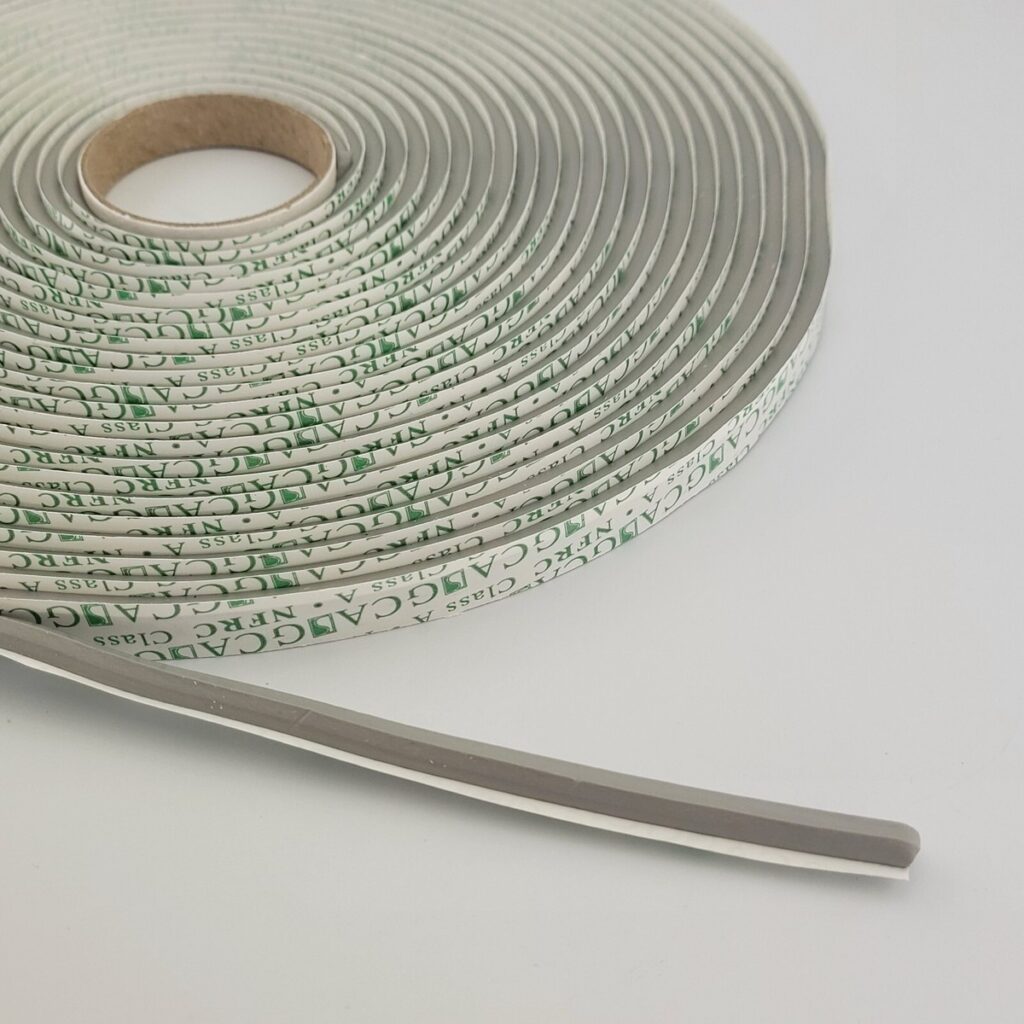
Film Backed Liner Tape
50mm x 1mm film backed butyl tape seals over suitable metal liner side laps in built-up roof and wall systems. It helps maintain the specified air and vapour seal across the joint.
The tape bonds to the liner on both sides of the joint, with the permanent backing film left in place. Follow the system detail for end laps, perimeter junctions and openings, where a different sealing arrangement may be required.

Cartridge Sealants
Cartridge sealants provide gun-applied seals for roofing and cladding joints. The appropriate type depends on the materials being joined, the exposure and the movement expected at the joint.
- Bedding mastics: For compatible lap and bedding details with limited movement. Some products form a surface skin while remaining pliable beneath.
- Neutral cure silicones: Cure to an elastic seal for compatible exposed joints where movement must be accommodated.
Select the product for the actual surface coating, joint dimensions and water exposure. Confirm the required colour and whether the finished seal needs to be painted, as paint compatibility varies between products.
Selection & Application
Check compatibility with the actual sheet, coating, rooflight and any adjoining seals or membranes. Neutral cure silicone is not automatically suitable for every rooflight material, particularly polycarbonate.
Our Roofing and Cladding Tapes and Sealants guide explains the different seal types, typical applications and installation considerations. Use it alongside the selected product’s current data sheet and the roofing or cladding system’s sealing details.